
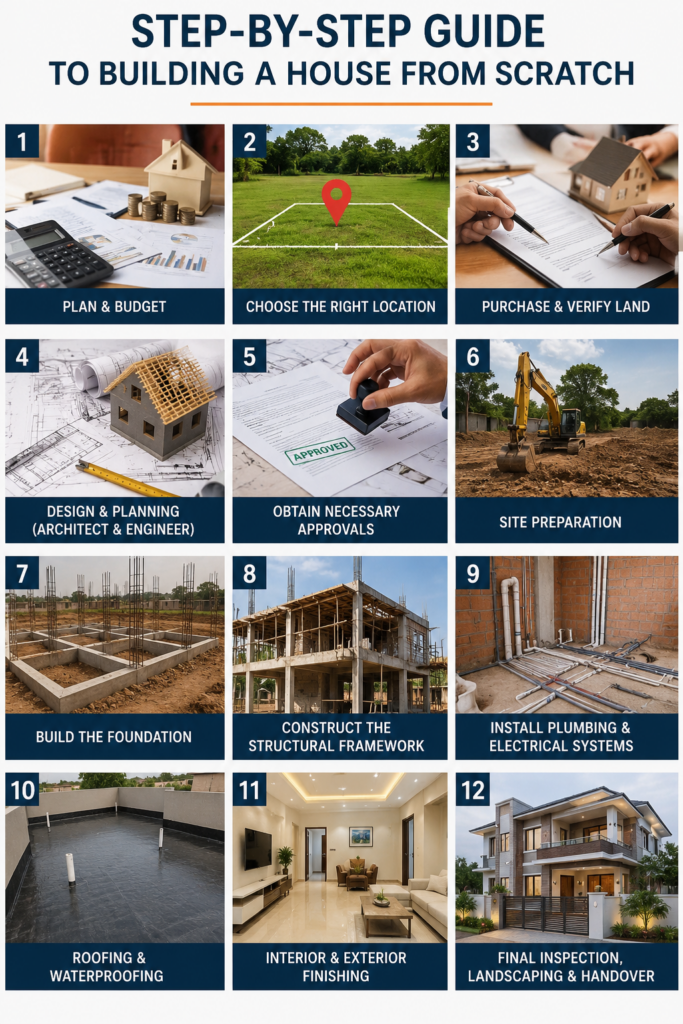
Step-by-Step Guide to Building a House from Scratch
- 1. Define Your Budget
Before purchasing land or hiring a contractor, determine your total construction budget. Consider:
- Land purchase cost
- Construction expenses
- Architectural and engineering fees
- Government approvals and permits
- Interior finishes and furnishings
- Emergency contingency fund (5–10%)
A well-planned budget helps prevent unexpected financial challenges during construction.
- 2. Choose the Right Location
Selecting the right location is just as important as building the house itself. Look for:
- Good road connectivity
- Access to schools, hospitals, and shopping centers
- Water and electricity availability
- Future development potential
- Safe and peaceful surroundings
A prime location increases both your home’s value and quality of life.
- 3. Purchase and Verify the Land
Before buying a plot, ensure all lega documents are verified, including:
- Property ownership records
- Sale deed
- Encumbrance Certificate
- Property tax receipts
- Approved layout plans
- Building permissions
Consult a legal expert if needed to avoid future disputes.
- 4. Hire an Architect and Structural Engineer
Professional planning is essential for a durable and functional home.
Your architect will:
- Design the floor plan
- Create 3D elevations
- Optimize space utilization
- Ensure compliance with local building regulations
A structural engineer ensures your home is safe, stable, and built to withstand environmental conditions.
- 5. Obtain Necessary Approvals
Before starting construction, secure all required permissions from local authorities. These may include:
- Building plan approval
- Construction permit
- Utility connections
- Environmental approvals (where applicable)
Starting construction without approvals can lead to penalties and delays
- 6. Site Preparation
Once approvals are complete, prepare the construction site by:
- Clearing vegetation and debris
- Marking boundaries
- Conducting soil testing
- Leveling the ground
- Setting out the building layout
Proper site preparation lays the foundation for a successful project.
- 7. Build the Foundation
The foundation supports the entire structure.
This stage includes:
- Excavation
- Footings
- Reinforcement steel installation
- Concrete pouring
- Waterproofing
A strong foundation ensures the long-term stability of your home.
- 8. Construct the Structural Framework
This phase involves building:
- Columns
- Beams
- Slabs
- Walls
- Staircases
- Roof structure
Quality materials and skilled workmanship are essential for structural strength.
- 9. Install Plumbing and Electrical Systems
After the structural work, install:
- Water supply lines
- Drainage systems
- Electrical wiring
- Internet and TV cabling
- Ventilation systems
Proper planning at this stage minimizes future maintenance.
- 10. Roofing and Waterproofing
Install the roof and apply waterproofing to:
- Roof slabs
- Bathrooms
- Balconies
- Water tanks
- Exterior walls
Good waterproofing protects your home from leaks and moisture damage.
- 11. Interior and Exterior Finishing
Bring your home to life with finishing work, including:
- Flooring
- Wall plastering
- Painting
- Doors and windows
- Kitchen cabinets
- Bathroom fittings
- Ceiling designs
- Exterior paint and cladding
These finishes improve both functionality and aesthetics.
- 12. Final Inspection and Quality Check
Before moving in, inspect:
- Electrical systems
- Plumbing
- Flooring
- Paint quality
- Doors and windows
- Waterproofing
- Structural finishes
Address any issues before taking possession of the property.
- 13. Landscaping and Handover
Complete the project by enhancing the outdoor space with:
- Garden landscaping
- Driveways
- Compound walls
- Gates
- Outdoor lighting
- Rainwater drainage
A well-designed exterior adds value and curb appeal to your home.
- Final Thoughts
- Need Professional Construction Services?